Two runs, one kebab eaten standing up at a bus station, and the conversation that made the tour a thing we do on purpose.
Words — Johan
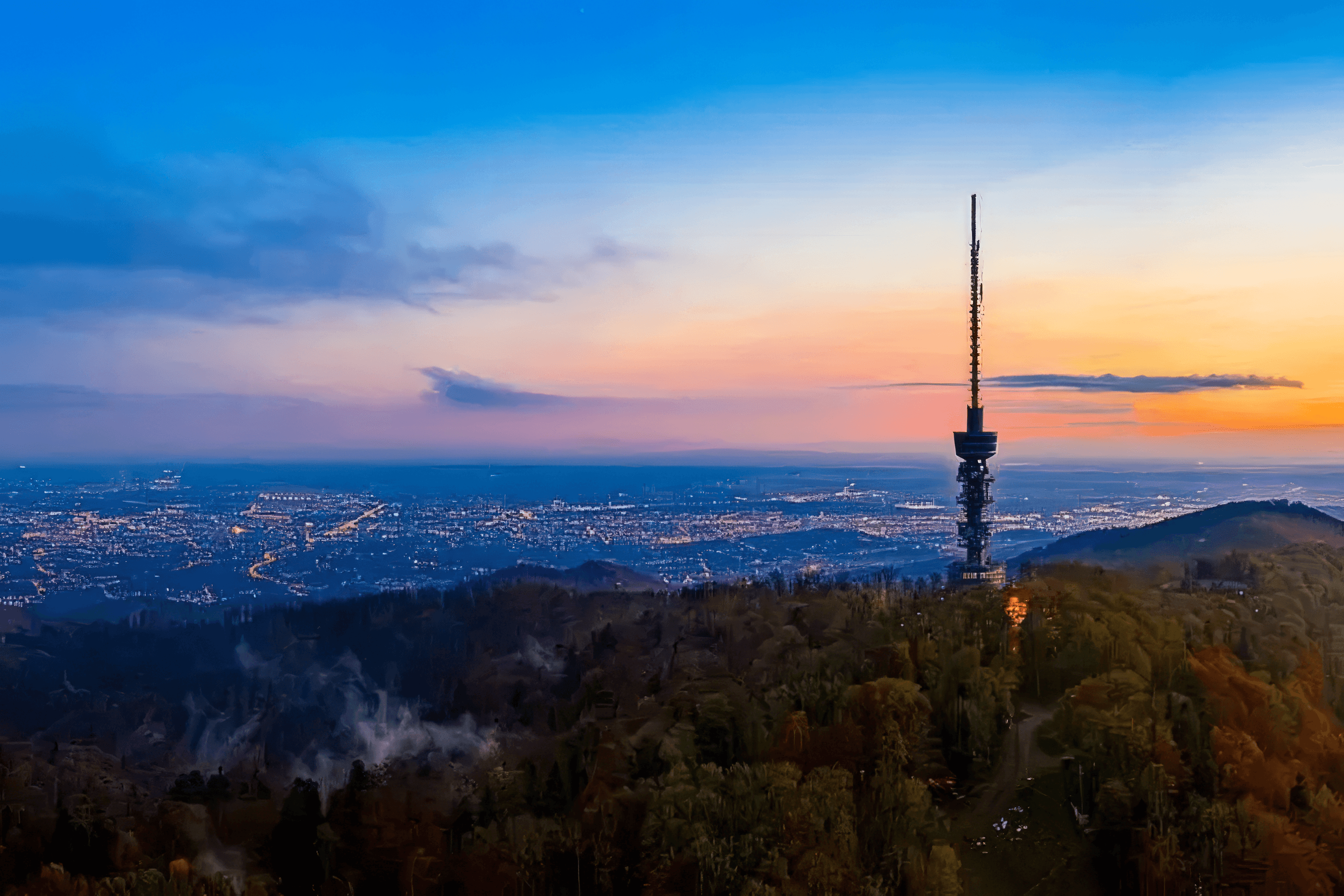
Sljeme, above the city. The tram goes to the bottom of this.
We bought two litres of spirits on the first day and had nowhere cold to put them.
Gin and vodka, and soft drinks to mix. The room had no fridge. So we carried bags of ice up to the room and emptied them into the wash basin in the bathroom and stood the bottles in it. One bag was not enough. We went back several times. This was the first work any of us did in Croatia.
It had been hot since we landed. Not the kind that breaks in the afternoon. It changed colour around six and stayed.
The hotel was the DoubleTree, between the old town and Novi Zagreb, a modern building in a charmless stretch of ground by the tram tracks. There were three of us in one room. A double bed and a sofa bed. We had sorted that out without discussing it.
On the first day we ran south towards Novi Zagreb, over the Sava, as far as Bundek. It was too hot and we did not manage much more than that. I remember nothing else about the run itself.
Bundek is a lake that exists by accident. In 1955 gravel was dug out of the ground there for a pavilion at the Zagreb Fair, and the digging carried on for another five years because the Freedom Bridge needed gravel too. The hole filled with water. People started swimming in it. By the 1970s it was where the city went to swim, and in the early 1980s swimming was banned on sanitary grounds and the place went to scrub and was left to a few fishermen. It was cleaned out and rebuilt in 2005. They say it is named after a man called Josip Bundek. Nobody seems certain about that.
That evening I slept. I had not planned to. The other two stayed up and kept drinking, and when I woke it was eight in the evening and I worked out that none of us had eaten all day.
There is nothing to add about the drinking. It happened and that is all.
We had assumed food would arrive at some point. Nobody had made it arrive.
Getting them out of the hotel took a while. After that I walked about ten paces ahead the whole way. Not to go faster. So there was always something in front of them to follow.
It was getting dark and somewhere along there I told one of them that I was lost and that I felt alone. One of them. Not both. That was the divorce.
We had known each other for years and covered a lot of ground together, and it had still put a distance between us that none of us had named. He was in no condition to take it. I did not think he had heard it.
We were going to the bus station because we believed it would be open. That was the whole plan.
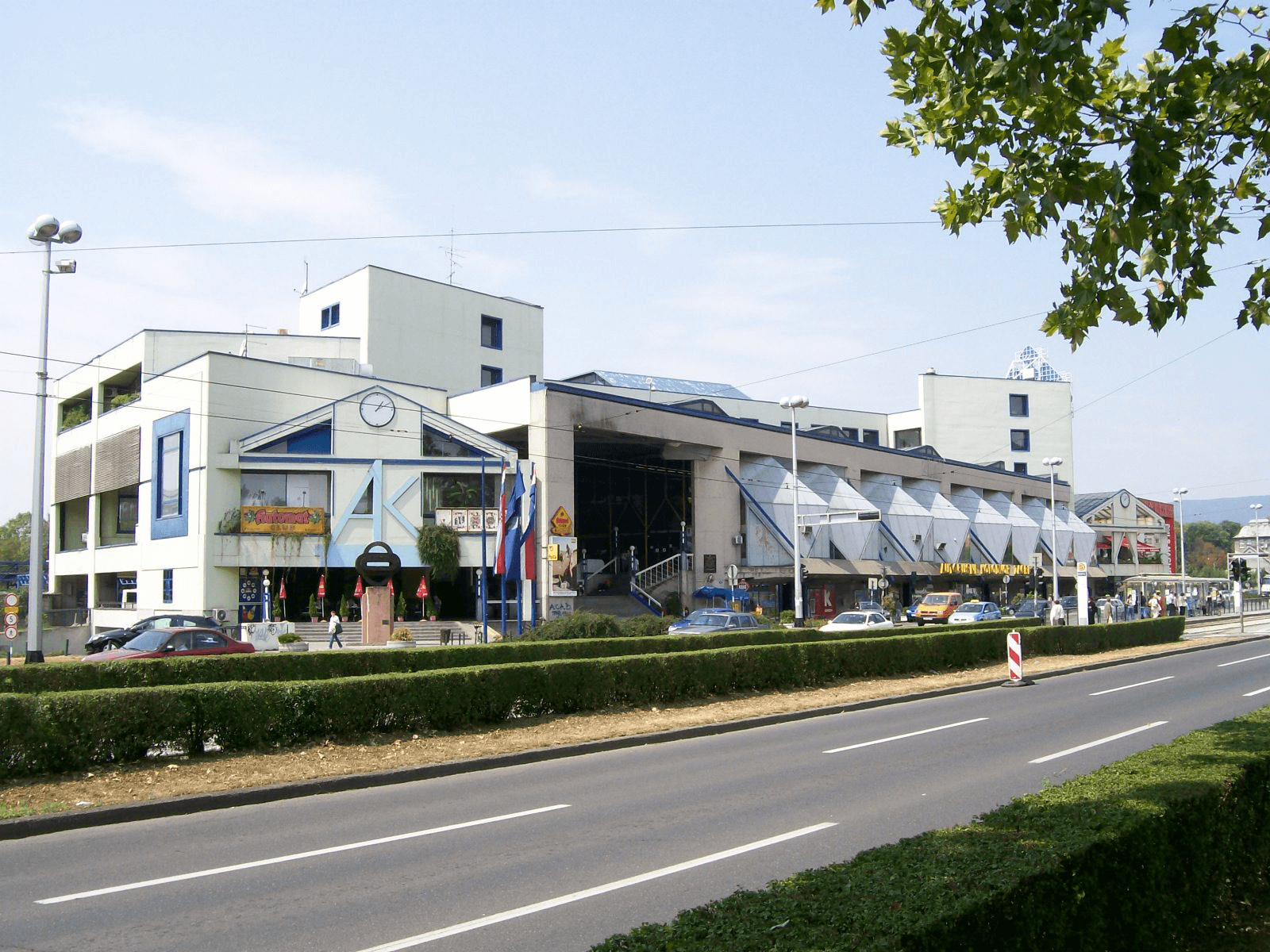
Autobusni Kolodvor sits on Marin Držić Avenue, in Trnje. Concrete, blue trim, a clock on the front that still works.
It opened in November 1961. The building we walked into was drawn between 1986 and 1987 and put up for the Summer Universiade, a student games. Forty-four stands. Still the largest of its kind in Southeastern Europe. Nobody has softened it since.
The architects were Vojteh Ravnikar and Majda Kregar. Slovenes. Ravnikar was born in Ljubljana in 1943 and grew up in Nova Gorica.
Nova Gorica is worth knowing about. In 1947 a border was drawn through the Goriška region and the town of Gorizia ended up in Italy. The villages left on the Yugoslav side had ten thousand people and no centre. So Yugoslavia built one, from nothing, next to the old town and in full view of it. The ground was marsh and a wrecked cemetery and had to be drained first. Youth brigades did the work, six thousand of them in the early years. A speaker at the time said Gorizia had been torn out of the mother's body. They were building the replacement while he said it.
The plan came from Edvard Ravnikar, who had trained under Le Corbusier. Same surname. I have found nothing saying they were related.
The town did not come out as drawn. A model and a monument are what is left of the plan.
So the man grew up inside a replacement for a town that had been taken. Then he drew a bus station for a student games, in a country that had four years left. He took Slovenia's national architecture prize the same year the station opened. He kept working until 2010, and the buildings he is known for are on the coast — the town hall at Sežana, a hotel in Piran, the theatre at Nova Gorica. Not this one. This is the one that outlasted the state that ordered it.
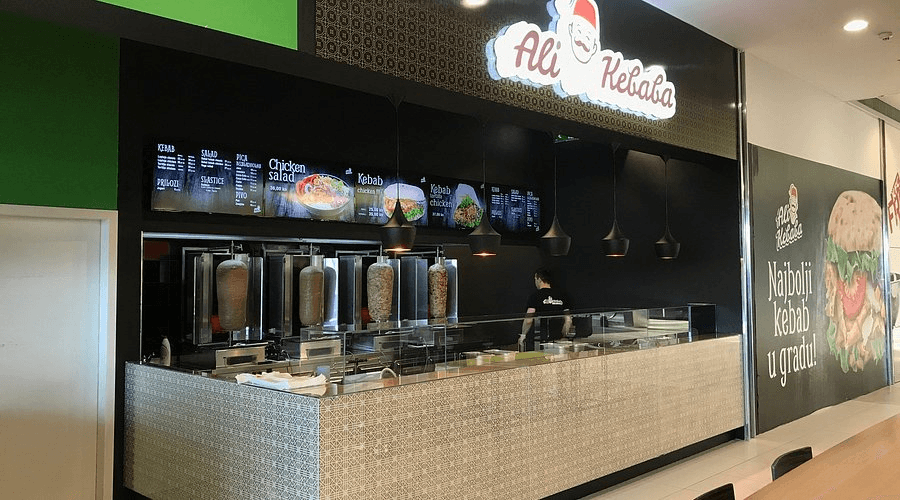
The kebab shop inside is called Ali Kebaba. Screens over the counter. Chicken. Mozzarella. Prices in euros, which are new here. A fridge of bottles lined up like they had been sorted by colour. We ate standing up and did not talk much. On the screen behind the counter the numbers kept moving. 58. 59.
The second day we took tram 15.
It runs from Mihaljevac up to Gračansko Dolje, five stops, seven minutes, at the foot of Medvednica. The end of the line is in a district called Podsljeme, which means below Sljeme, the peak above the city. The cable car station is there, 267 metres up. We got off at the end and started running down.
Eleven kilometres back to the centre. It was the same heat as the day before. We drank what we had early and then had nothing, and by halfway nobody was talking.
The route goes through Dotrščina.
It is a forest park, about two square kilometres, between Maksimir and the mountain. Between 1941 and 1945 the Ustaše brought people here from Zagreb and shot them and put them in pits. Jews, Serbs, Roma, Croatian anti-fascists. Seven thousand is the number usually given. A historian who worked through the archives said the project was never finished and that no number can be stated with certainty.
The memorial park was laid out in 1968. Vojin Bakić made the sculpture at the entrance, a crystal form in steel. It says nothing about what happened. It names nobody and shows nothing. Nine monuments were planned. Three were built.
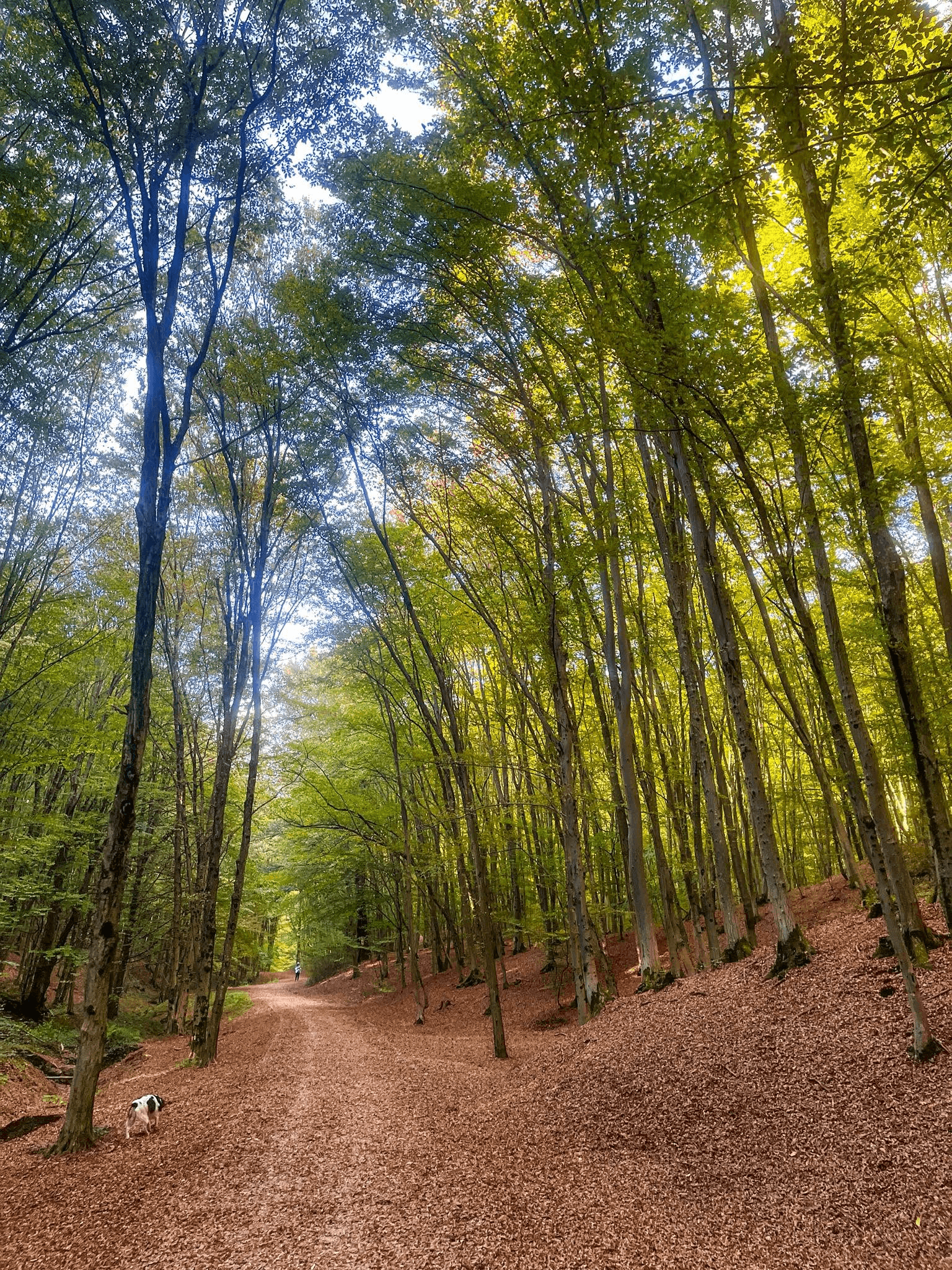
It is a good place to run. Tall trees, paved paths, shade. People walk dogs there. Nobody we passed looked like they were thinking about it, and neither were we until afterwards.
Then Maksimir.
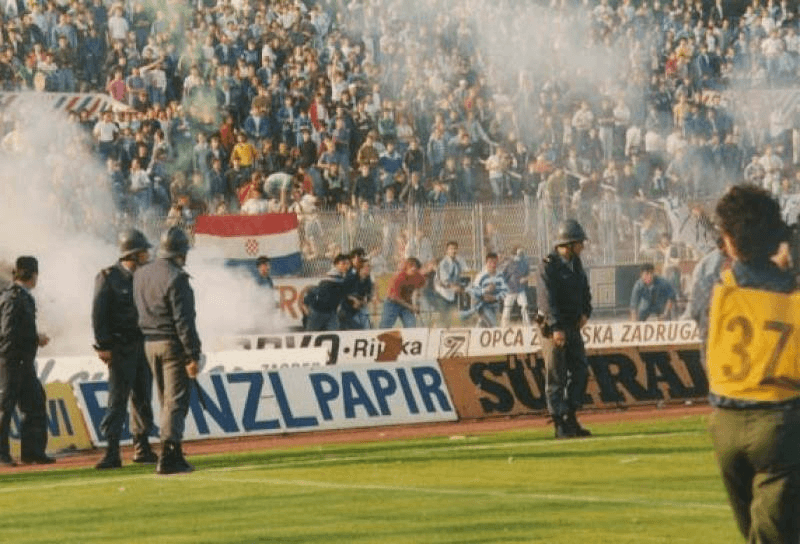
Dinamo's ground, and the reason people outside Croatia know it is a match that never kicked off. 13 May 1990, Dinamo against Red Star Belgrade, three weeks after the first multi-party elections in fifty years. The Bad Blue Boys came through the fences. Over sixty people were hurt. Dinamo's captain, Zvonimir Boban, kicked a policeman who was hitting a fan, and that is the photograph everyone has seen. Željko Ražnatović was with the Red Star supporters that day. A year later he was commanding a paramilitary unit in the war, and men from both ends of that stadium were fighting each other for real.
They say the war started here. It is repeated often enough that anthropologists have written papers about why it is repeated. In 1994 a monument went up under the west stand for the Bad Blue Boys who were killed.
We ran past it without stopping. We were finished by then, dried out, and the last part into the centre took longer than it should have.
The second evening we ate at La Štruk, on Skalinska, up in the Upper Town. It serves štrukli and nothing else. Dough parcels filled with cottage cheese, eggs and sour cream, boiled or baked. Household food from Zagorje, the hills north of the city, and on the national list of intangible cultural heritage.
Two brothers and a friend opened it around 2013 with no experience of restaurants. People in the trade told them a pastry that needs forty minutes in an oven was not a business. It worked from the first year.
Every portion is made when it is ordered, so you wait about twenty minutes. We had run eleven kilometres in the heat that day and eaten a kebab standing up at a bus station the night before. We were content to wait.
We sat out in the garden. The wall down one side of it is part of the medieval Kaptol fortifications. Nobody there makes anything of it.
He had heard it. It came up again later and it turned out that saying it had been the thing that needed doing. There was relief in it, mostly for me. It put open ground under us that had not been there for a long time, and after that we could move.
The running tour was decided at home, afterwards. We arrived separately at the same conclusion, which was that we should do it again, and that next time we should have a reason to be out on those roads.
Back at the hotel the bottles were still standing in the basin. The ice had gone hours ago. The water was warm and had a bit of the bags in it.
Zagreb is where this started. Five cities on the map so far, every route published. You do not need us to run any of them.